CLARITY
Climate-Linked AI for Responsible Insight on Neuro-Health and Economic Risk among Vulnerable Workers.
class="antialiased">
CLIMATE RISK WOMEN GLOBAL is a global network of women researchers and professionals.
We conduct interdisciplinary and transdisciplinary research on the
impacts of climate risk across scientific, economic, and social systems
translating findings into evidence-based policy and practice.
Why representation matters
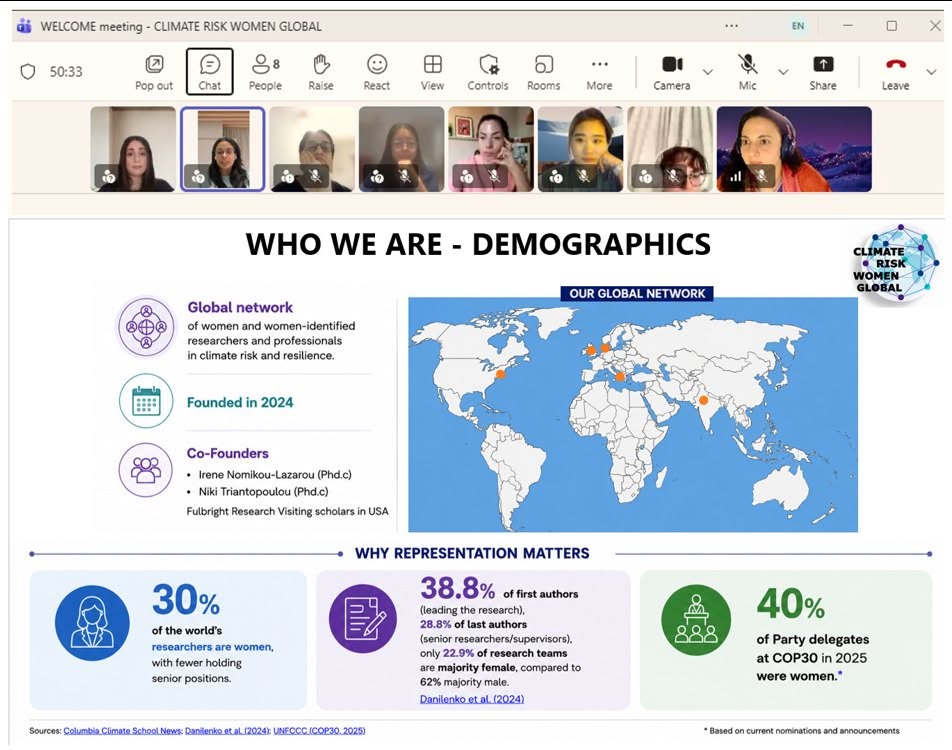
30% of the world's researchers are women, with fewer holding senior positions *.
22.9% of research teams at COP30 (2025) were majority female *.
In climate adaptation policy research women make 38.8% of first authors (leading the research), 28.8% of last authors (senior researchers or supervisors) *. The gap matters because: A global network of women climate risk researchers and professionals advancing adaptation through research-driven collaboration. Focuses on how climate risk reshapes economic sectors, vulnerable communities, and institutional responses. Active across the Americas, Europe, and Asia. Support rigorous, inclusive climate research: fund a convening, fund a research project, accelerate publication, or partner with us. Our mission
We empower women researchers and professionals through mentorship, foster research
collaboration across disciplines, and create a space where diverse ideas, and the people
behind them, can thrive.
We integrate expertise across disciplines, from climate science and finance to public health, AI, and the humanities.
Our work translates evidence into strategies that work and outcomes that measurably improve climate resilience.
Who we are
CLIMATE RISK WOMEN GLOBAL is a vibrant knowledge-exchange and research network bringing
together women and women-identified professionals and scholars in climate risk management
and data analysis worldwide. We foster purposeful collaborations, drive research partnerships,
and provide a focused space to share real-world experience and cutting-edge methods.
Our story
CLIMATE RISK WOMEN GLOBAL began with a simple observation. Research thrives on collaboration, and we wanted to
build more of it, across departments, institutions, and borders. As PhD researchers,
we saw how much value came from connecting with others working on similar questions,
and we wanted that exchange to happen more often, and more intentionally.
As women in the climate risk field, we knew firsthand how much untapped potential there was,
and we wanted to help that momentum grow. Our own research experience showed us what's
possible when researchers combine their expertise efficiently, and channel it into real outcomes.
That's why we created CLIMATE RISK WOMEN GLOBAL, a space between academia and industry where women can contribute
fully to the research, partnerships, and projects shaping this field's next chapter.
CRWG is structurally interdisciplinary, bringing together expertise that rarely sits at the same table, from climate
risk management, economics and finance to urban systems, cultural heritage and animal science, from biology,
data science and AI to public health, neuroscience and the humanities, because assessing climate risk and
addressing its impacts means using every tool in the box.
“We believe that representation, apart from its equitable goal, promotes research that actually works,
because when women's expertise is given the space to shape addressing climate risk,
societies don't just gain talent, they gain the questions they would ask and the solutions only they could imagine.”
Research specialists across climate, data science, complexity, health, biology and social sciences. Common tools, methods and metrics that allow insights to travel across disciplines. We apply shared tools to real-world projects where they add measurable value. We ground policy in climate science and strengthen resilience in communities and systems. Research
Our research focuses on how climate risk reshapes economic sectors, vulnerable communities, and institutional responses.
Climate-Linked AI for Responsible Insight on Neuro-Health and Economic Risk among Vulnerable Workers.
Mapping systemic failures in India's agricultural insurance.
Climate-risk literacy and AI responsible use in schools.
Insurance as biodiversity parallel, both buffer against shocks and resilience providers.
Climate variability reshapes production costs and income stability in Mediterranean aquaculture operations.
The research provides empirical evidence for policy interventions that protect sector profitability and worker livelihoods.
Using AI to map and measure how contract language, pricing, and risk allocation reflect physical climate exposure across infrastructure,
health insurance, and occupational agreements surfacing where alignment exists and where gaps merit attention.
Climate resilience in marine and coastal systems. Heat, flooding and adaptation in cities. Valuation, exposure and financial stability. Tipping points and cascading risk. Protecting heritage under climate threat. Modelling, prediction and climate analytics. Health impacts and pharmaceutical response. Physiological and cognitive climate effects. Systemic modelling of coupled systems. Grids, energy and resilience planning. Behaviour, risk perception and narrative. Physical processes and spatial risk. Our Network
CRWG is an expanding network of women researchers and professionals
driving climate solutions through collaborative research and action
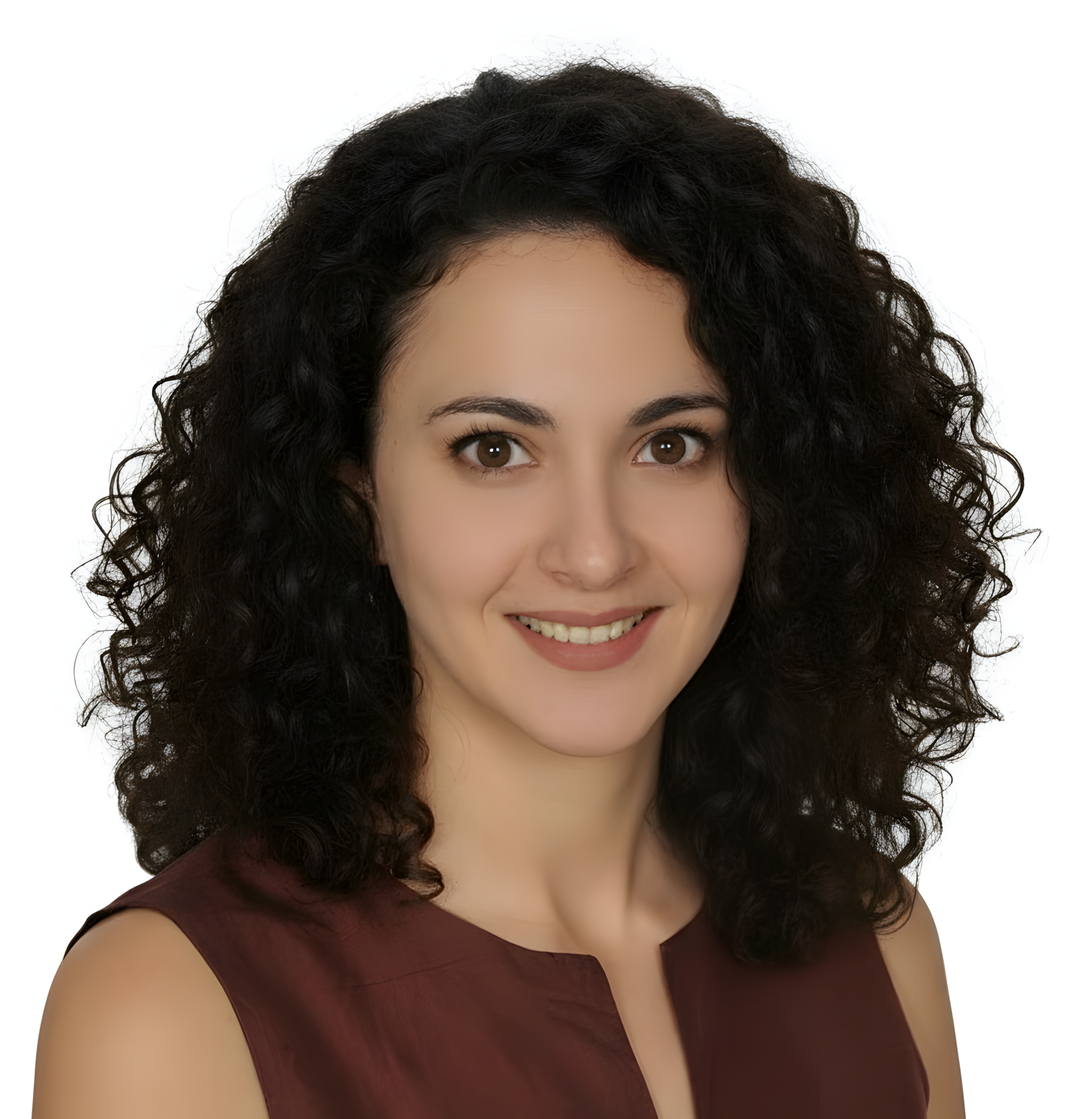
Co-Founder · Director
Irene Nomikou-Lazarou is a PhD candidate in Economics at Athens University of Economics and Business,
where her research focuses on climate risk, catastrophic natural events, and their impacts
on insurance and financial systems. She holds a bachelor's degree in Economic and Regional
Development from Panteion University and Master's degrees in Economic Theory from Athens
University of Economics and Business, Data Science from The American College of Greece. She is a
Fulbright Research Scholar at Columbia University's National Center for Disaster
Preparedness–Climate School. Since 2022, Irene has worked as a researcher at the Foundation
for Economic and Industrial Research (IOBE), contributing to sectoral studies on climate risk
in the financial system, green transition, entrepreneurship, environmental sustainability, regional development, and housing policy.
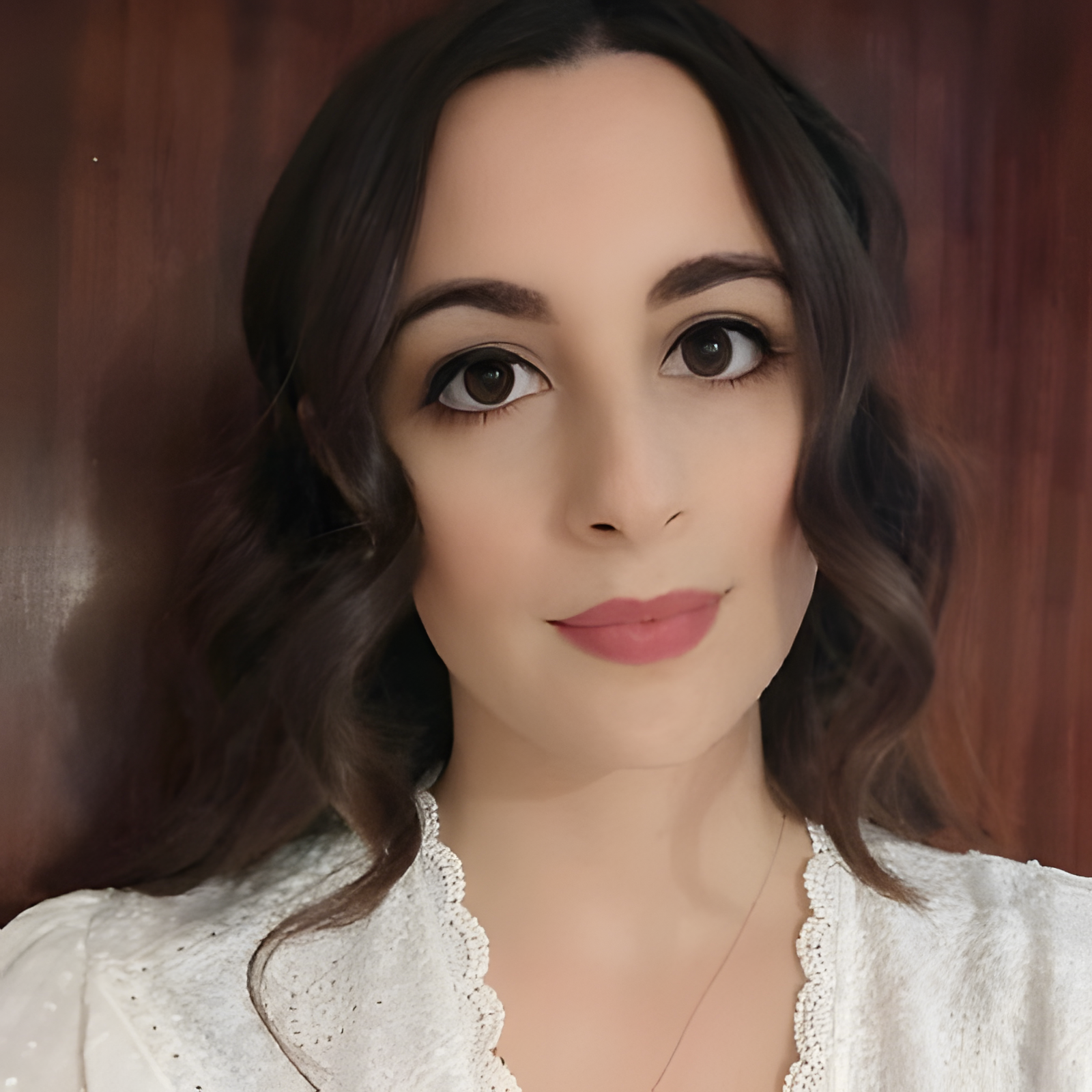
Co-Founder · Researcher
Nikoletta Triantopoulou is a PhD candidate in Molecular and Cellular Neuroscience at the University of
Crete School of Medicine, where her research focuses on the molecular and structural mechanisms
that determine the regenerative capacity of injured axons. She holds a BSc in Biology and an MSc
in Biomedical Sciences, specializing in Stem Cells and Regenerative Medicine, from the University
of Patras. As a Fulbright and Bodossaki Fellow and an NIH Graduate Partnerships Program pre-doctoral
fellow, she conducted part of her doctoral research at the National Heart, Lung, and Blood Institute
(NHLBI), National Institutes of Health, investigating structural responses to axonal injury using
cryo-electron tomography. She is currently a Lecturer, Module Leader, and Laboratory Manager at
Metropolitan College, where she teaches across Biomedical Sciences and allied health programmes,
mentors students, and supervises undergraduate research. Her broader interdisciplinary interests
explore connections between neuroscience, climate and health, Responsible AI, resilience, and education. Researcher and Collaborator
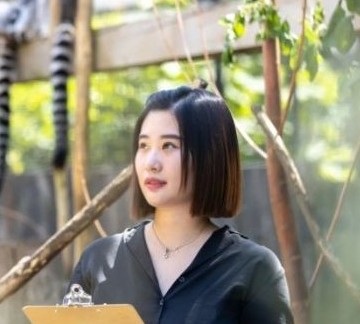
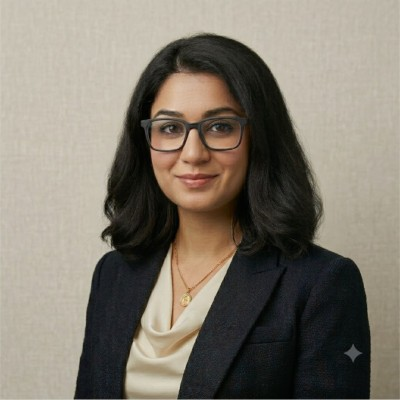
Dr Yurong Yu is currently the Scientific Adviser at the Antarctic and Southern Ocean Coalition (ASOC).
She holds a PhD in Environmental Policy from Imperial College London, an MA in Climate and Society from
Columbia University, and Bachelor's degrees in Economics from Peking University and Rural Development
Studies from China Agricultural University. Her work focuses on biodiversity conservation, environmental
decision-making, and international ocean governance.
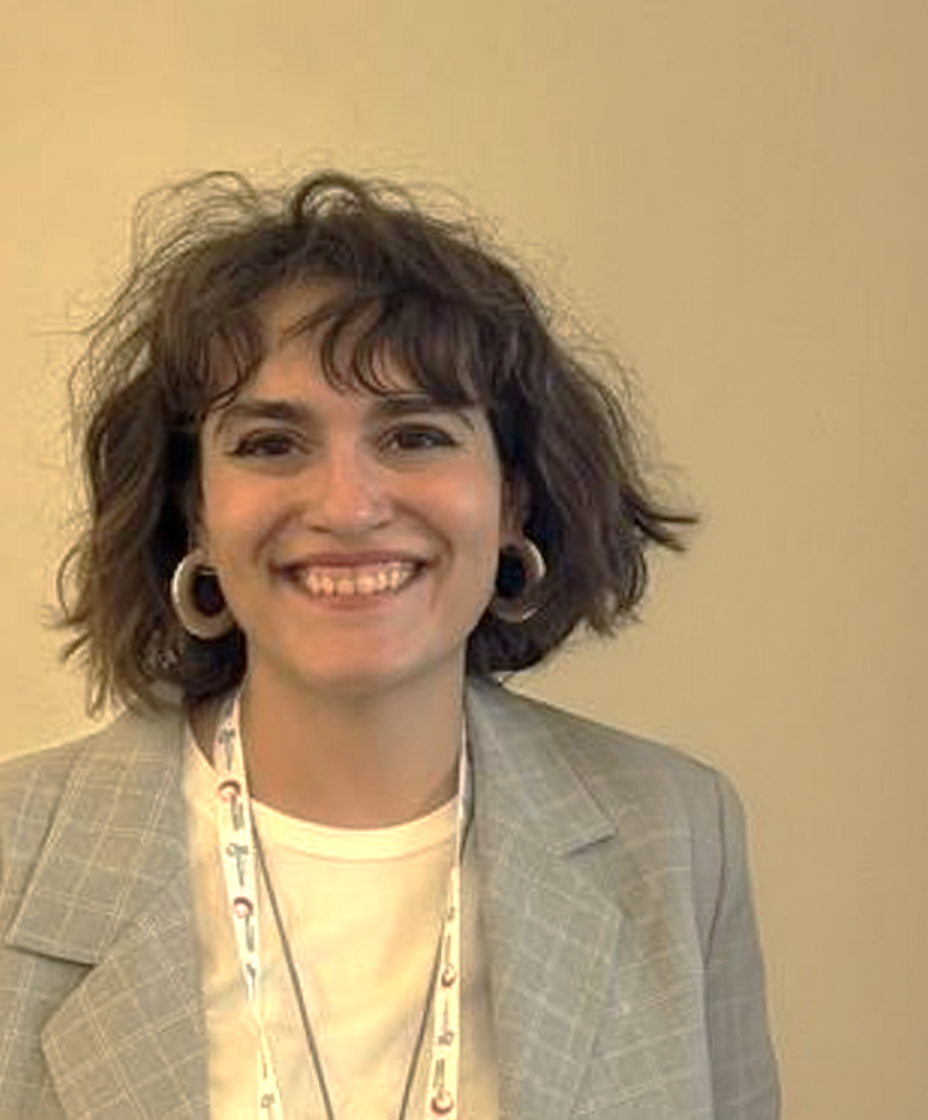
Researcher and Collaborator
Christina Zantioti is an animal scientist specializing in aquaculture, with experience
in research and education. She is currently finishing her PhD in fish nutrition, focusing
on novel feed additives. She is the founder of SEADEA, a research, education and science
communication consultancy for the blue economy, through which she has worked with NGOs
and producers' associations. She is also the President and co-founder of NOWA Network
of Women in Aquaculture, an international association promoting inclusivity in aquaculture.
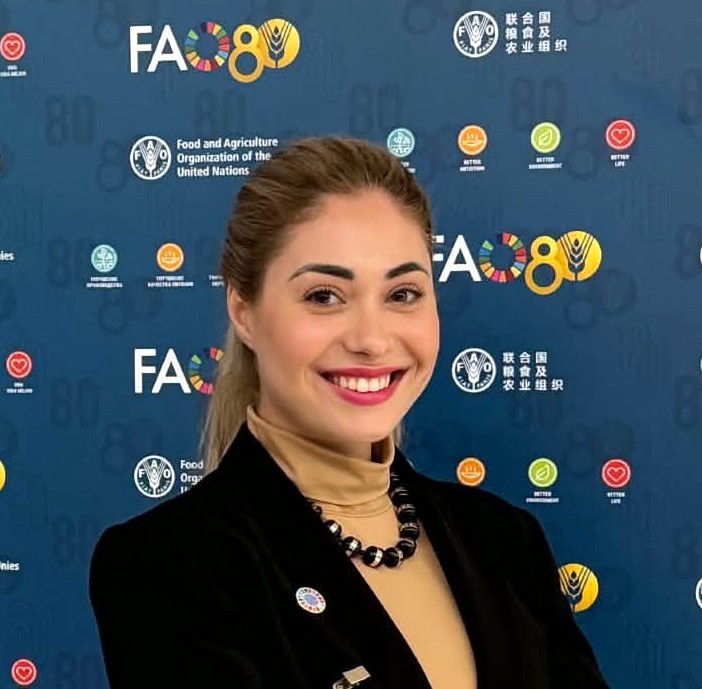
Christina also works with FAO’s World Food Forum, contributing her experience to the Working
Group on Aquaculture of the Global Youth Constituency for Fisheries and Aquaculture.
Researcher and Collaborator
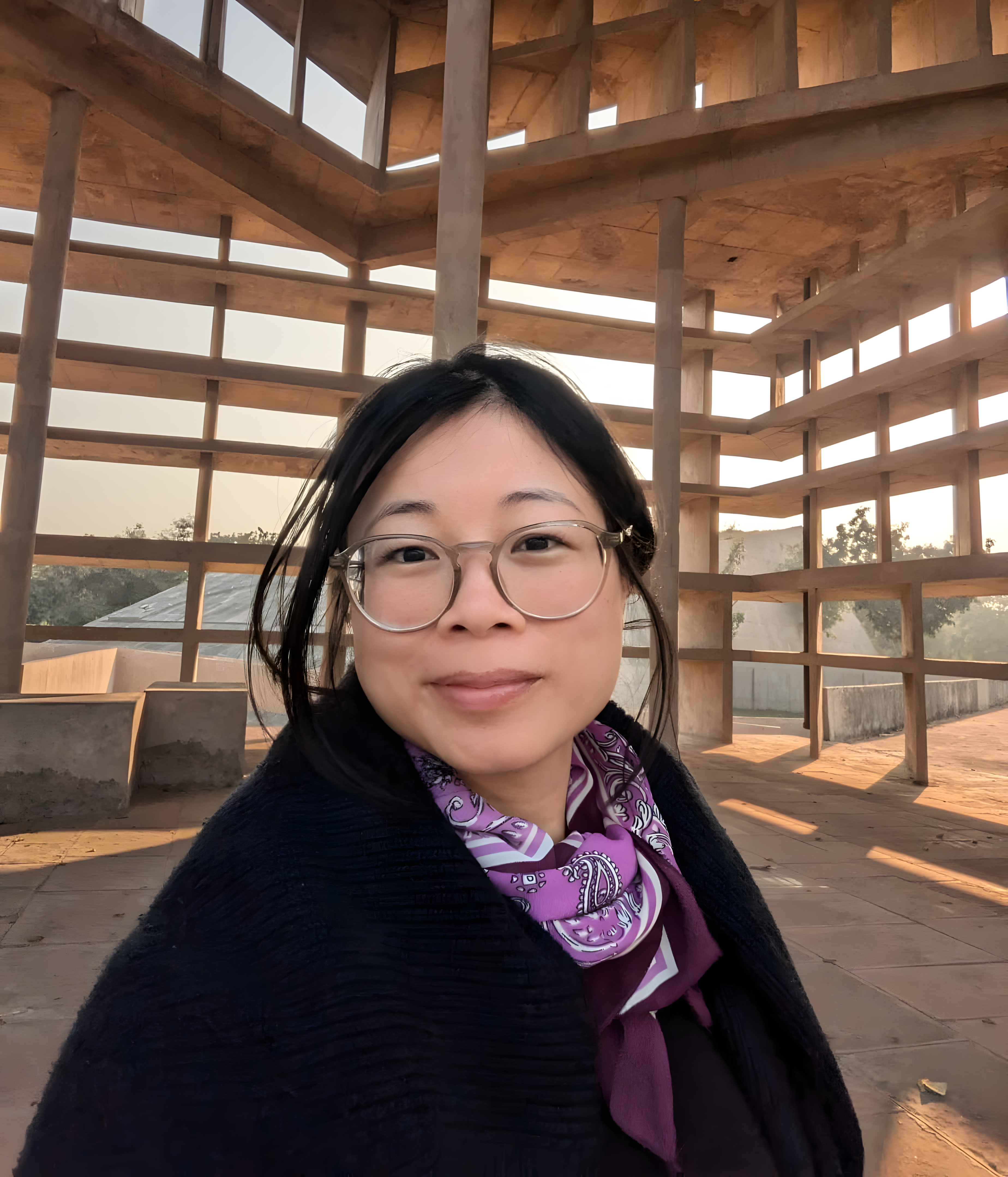
Renata Karathanou is a fisheries and blue economy expert, researcher, and Founder of FishForma Co.,
a consultancy working across sustainable fisheries and aquaculture, marine and freshwater conservation,
and the resilience of coastal and island communities. Her work bridges science, policy and practice,
providing strategic and technical assistance, supporting access to national and European funding opportunities,
and facilitating stakeholder engagement and collaborative initiatives. She is also a PhD researcher on marine alien
species in Mediterranean fisheries, exploring their ecological and socioeconomic impacts and implications for fisheries
adaptation and management. Renata actively contributes to international scientific symposia, professional forums and
stakeholder dialogues, with an interdisciplinary focus on biodiversity conservation, climate resilience, sustainable
blue economy and the socioeconomic sustainability of aquatic and fisheries-dependent communities.
Researcher and Collaborator
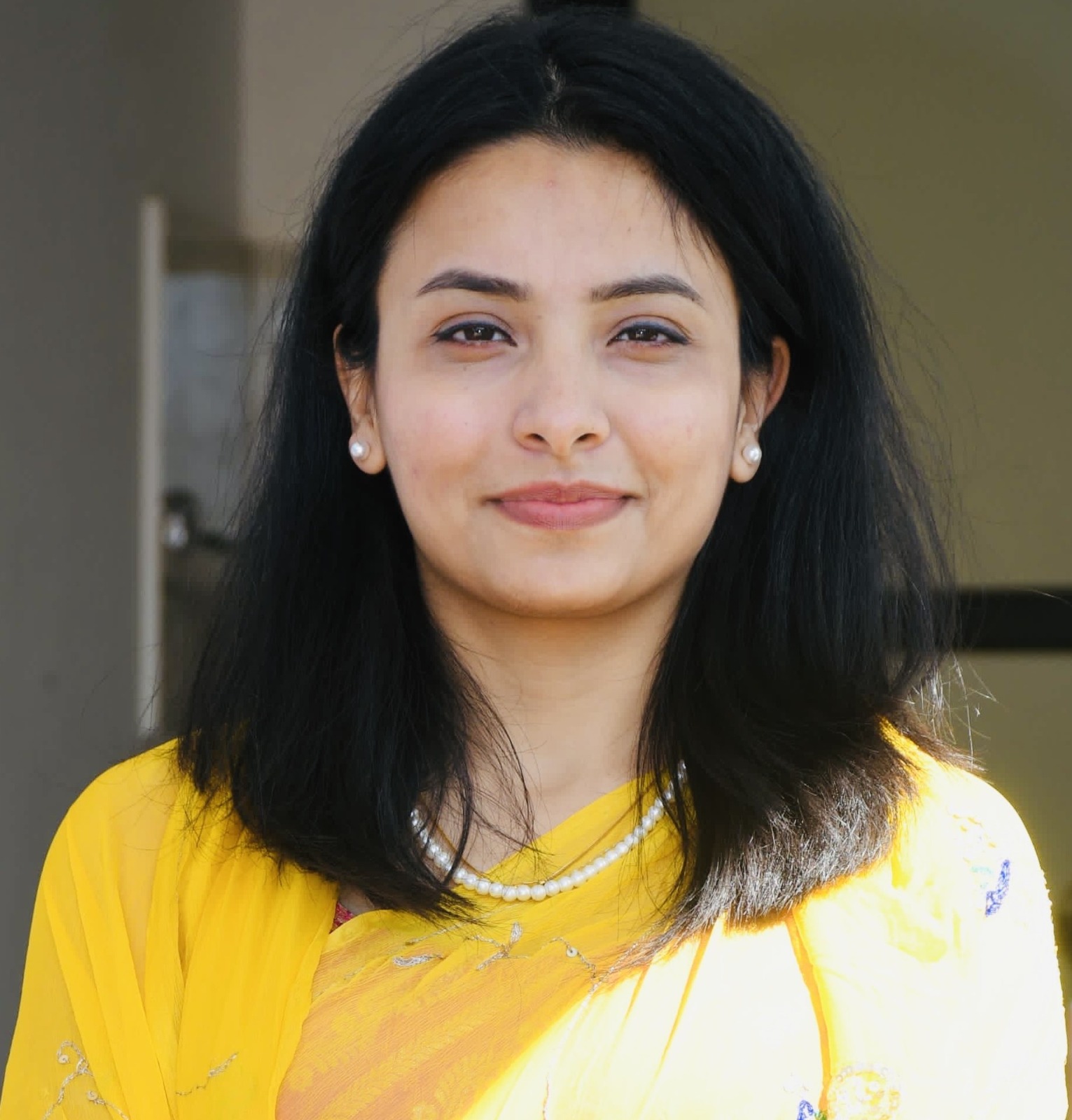
Dr. Vandana Choudhary is a Project Scientist at the National Institute of Disaster Management (NIDM),
New Delhi, where she contributes to revising India’s National Drought Manual (2020) and drafting national
guidelines on cold wave/frost, hailstorm and pest attack under the Ministry of Agriculture and Farmers Welfare
(MoAFW). She holds a PhD from the Special Centre for Disaster Research, Jawaharlal Nehru University. Her thesis
developed a multi-hazard approach to heat waves and drought in Rajasthan, with implications for governance.
She also holds an MA in Geography from JNU and a BA (Hons.) in Geography, and is a two-time UGC NET-JRF
qualifier. Her research interests include disaster studies, resilience and adaptive capacity, drought and
heat wave hazard assessment, climate extremes, farmer risk perception and community vulnerability.
She has published in international journals and presented her work at international conferences.
She was a visiting research scholar at the University of Twente (ITC) and received a Best Paper Award for her heat wave research in 2023.
Collaborator
Sachi Goel is an economist with 13 years in real estate research and advisory at CBRE India, where she was
Associate Director and Head of South India Research Operations. She authored 100+ research reports, led research
across nine sectors, and built and managed a team of 12-15 analysts and managers. She holds an MSc in ESG Management
(Distinction) from King's College London and the CFA Certificate in Climate Risk, Valuation and Investing, and is
now moving into climate risk and sustainable investing. Her work grounds sentiment and survey data into the
assumptions that drive forecasting models, and produces data-, fact- and science-backed sustainability content.
Collaborator
Arianna Friedman is an international development and strategic implementation professional focused on bridging research,
policy, and practice. Her background spans urban design and economic development, climate resilience planning, and
humanitarian operations. Based in New York, she works in city government, supporting innovation strategy and implementation.
She is also developing proposals for continuity-of-care programs in response to earthquakes in Venezuela. Her interests
center on post-disaster recovery and post-conflict reconstruction, particularly how integrated approaches to service delivery
, economic recovery, and institutional capacity can support more durable recovery outcomes.
Join the network Events & gallery
Conferences, workshops and convenings that bring our members and partners together.
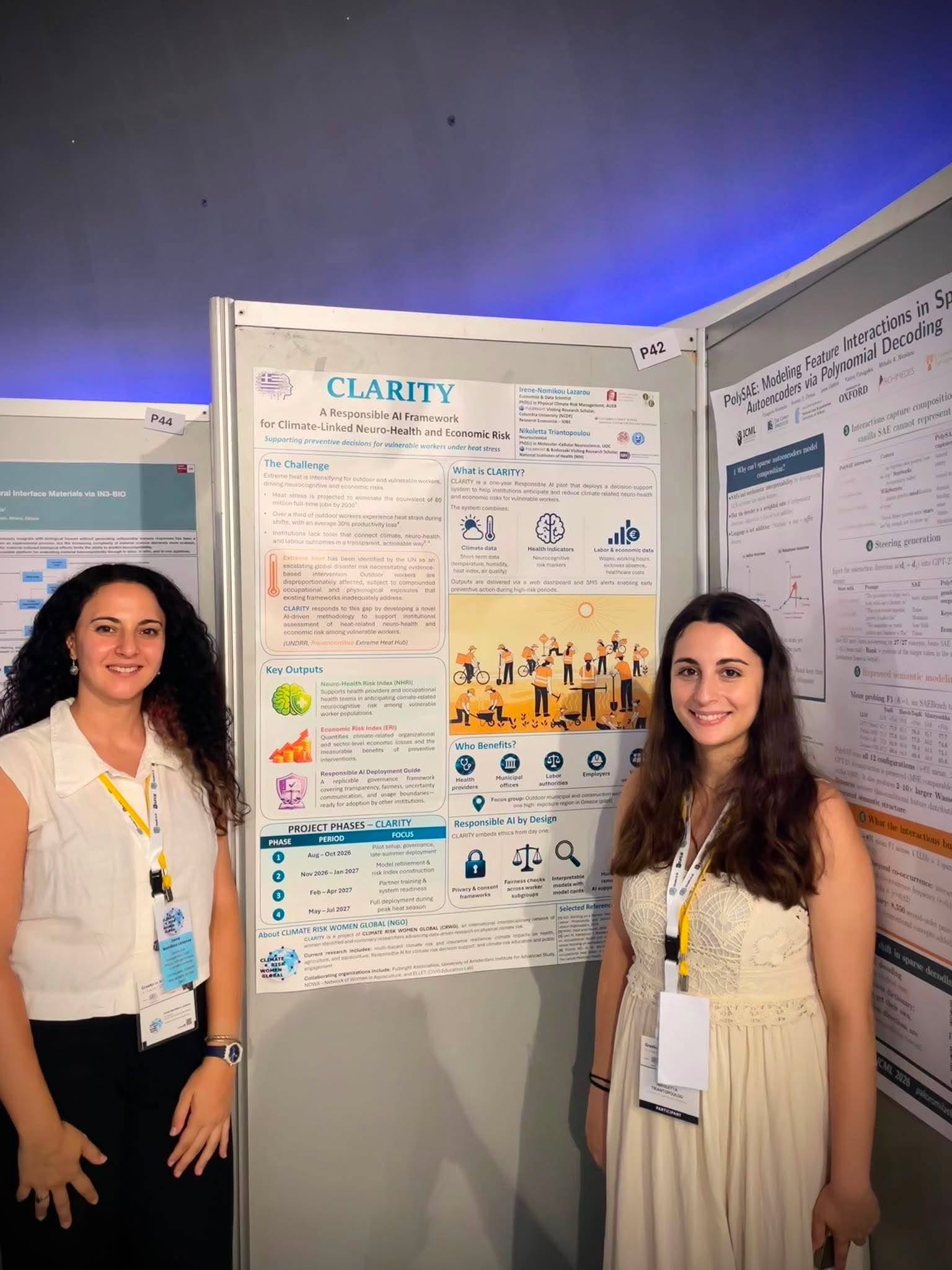
Next network meeting and research workshop - details to be announced. CRWG presented at Eugenides Foundation, Athens, Greece a responsible
AI decision-support system designed to anticipate and reduce climate-related health and economic risks for outdoor
workers. The project fills a critical need by bringing occupational heat exposure into economic and health accounting
frameworks, expanding how we account for economic and health risks.
Founding meeting of the CRWG network. Researchers and practitioners collaborating on climate risk projects
under CRWG came together to formalize the organization, discuss ongoing working papers,
plan participation in key conferences, and map out next steps for the network. Highlights from our network's activities and collaborations will be published here. Support us
We work with foundations, institutions, philanthropic donors and public programmes
that share our commitment to evidence-based climate resilience.
Breakthrough insights emerge when the right minds meet.
By funding a CRWG convening, you bring together researchers and professionals from across the globe
whose work spans climate risk, from climate risk management and finance to urban systems, cultural
heritage, biology, data science, and public health, in a space designed for deep exchange breakthrough
moments where specialists discover how their questions overlap, emerging scholars learn directly from
accomplished practitioners, and women researchers and industry leaders from different continents create
mentorship and networks that transcend geographical and institutional boundaries.
After the convening, participants return to their home countries with deepened relationships and a shared vocabulary
for climate risk work, networks and insights they integrate into their own research, institutions, and sectors,
strengthening how climate solutions are designed globally. By funding a CRWG convening, you produce a synthesis
report documenting how women researchers in STEM combine their expertise to generate climate risk solutions
across economic, social, and environmental sectors. Then seed the research teams and professional networks
that become the source of peer-reviewed publications, shared methodologies, policy guidance, and sustained
partnerships advancing climate risk work across borders and disciplines. Climate risk research has critical gaps.
By funding CRWG to investigate a priority climate risk question, examining socioeconomic, physical, or cultural
impacts across sectors, you mobilize an interdisciplinary network of women researchers to collaborate on rigorous, peer-reviewed analysis.
CRWG convenes the right experts, synthesizes their findings, and generates publications and methodologies
that contribute to how climate risk is understood and addressed across sectors and borders. This research output
becomes a public resource, it informs policy conversations and reaches the toolkit of practitioners worldwide.
CRWG researchers are currently working on ongoing research projects aligned with global climate risk emergency agendas.
By funding the acceleration of this work, you remove the resource constraints that slow publication, expand team capacity to deepen analysis,
and ensure open access so findings reach policymakers and practitioners at moments when they're actively shaping climate adaptation decisions.
CRWG is open to partnerships with universities, research institutes,
NGOs, and organizations working on climate risk. Through collaboration, institutions access a curated network of
women researchers and professionals with deep disciplinary rigor and demonstrated impact on climate risk.
Partnerships take shape through co-organizing conferences and convenings for early-career women researchers,
co-designing joint research projects, research capacity building among women scientists and professionals
in climate risk research and solutions, and investigations into how climate risk produces or exacerbates gender inequalities.
OUR RESEARCH & INSTITUTIONAL PARTNERS Contact
Whether you are a researcher wishing to join the network, an institution seeking
collaboration, or a funder interested in our work, we look forward to connecting with you.
✉️
info@climateriskwomenglobal.org
🏛️
Office location: Ymittos, Athens, Greece
Legal information
CLIMATE RISK WOMEN GLOBAL operates as a non-profit civil law company under Greek law.
We publish our registration and funding information in the interest of transparency and
to demonstrate our research independence. Donors and partner institutions requiring formal documentation,
invoices or a signed agreement may contact us directly.
Interdisciplinary research
on climate risk
A global network of women scholars.
Research teams with diverse perspectives catch analytical gaps, identify overlooked risks, and build better inclusive strategies.
Women experience climate risks through gendered roles and responsibilities, creating adaptation needs that gender-blind research inadequately addresses.
Integrating women's expertise from the research design phase, not as an afterthought, fundamentally changes what gets studied and how.
Complete research design yields adaptation strategies that fit actual constraints, cutting wasted spending on failed interventions and delivering measurable resilience outcomes that gender-blind research can't achieve.
Who we are
Our research
Our network
Fund our work
Representation is not symbolic. It is a precondition for research that produces evidence and adaptation strategies that actually work in real communities.
Women-led. Research-driven.
Building what's next in climate risk.
2024 to 2026.
From an idea among researchers
to a non-profit organization.
DEEP DISCIPLINARY EXPERTISE
SHARED ANALYTICAL FRAMEWORKS
COLLABORATIVE PROJECTS
Real-world impact
ONGOING PROJECTS
CLARITY
Drought, Delivery & Breakdown
CIVIS
Insurance as a Resilience Provider
Climate-Driven Cost Volatility in Mediterranean Aquaculture
Contract Intelligence for Physical Risk
Aquaculture & Fisheries
Urban Systems
Economics, Real Estate & Finance
Physical Risk & Systemic Change
Cultural Heritage
AI & Data Science
Public Health & Pharmacology
Biology & Neuroscience
Complexity Science & Econophysics
Critical Infrastructure & Energy
Psychology & Communication
Climate Science & Geography
Founders & Members
Irene Nomikou-Lazarou
Nikoletta Triantopoulou
Network
Yurong Yu
Christina Zantioti
Eirini Renata Karathanou
Vandana Choudhary
Sachi Goel
Arianna Friedman
Where our network meets.
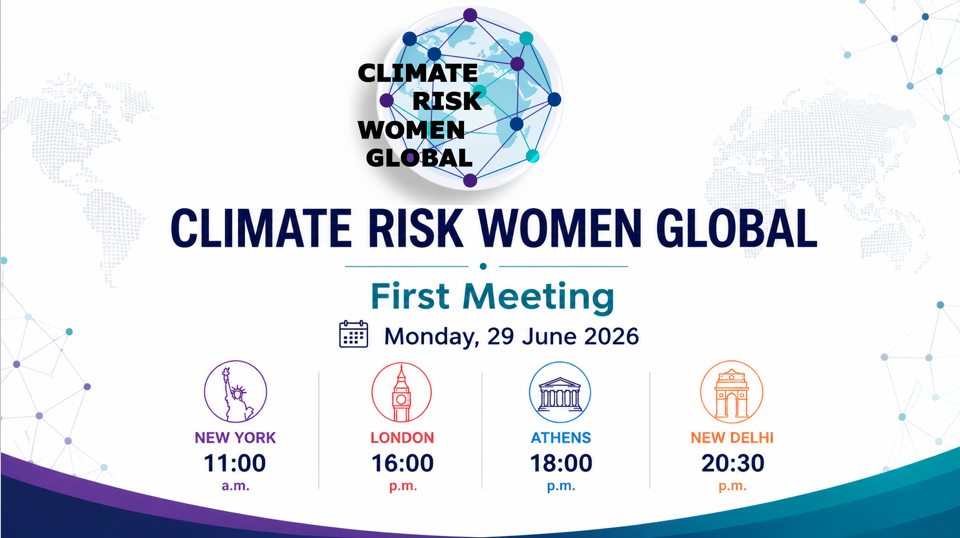
Upcoming convening
CLARITY project at Greeks in AI 2026 Symposium.
CRWG First Meeting
Fund rigorous, inclusive climate research.
Fund an In-Person Convening
Fund a Research Project on a Priority Climate Risk Topic
Accelerate Ongoing CRWG Research to Publication
Partner institutionally
Let's collaborate.
Legal details & registration.